
Omron WLCA2-TS Two-Circuit Limit Switch
The Omron WLCA2-TS is a two-circuit limit switch engineered for precise and repeatable mechanical position detection in industrial automation systems. Designed as a standard size limit switch, this model uses a roller lever actuator to ensure smooth actuation from cams and moving machine components. With a DPDT contact configuration, it enables reliable switching of control signals in demanding applications. Built with a rugged enclosure and IP67 ingress protection, the switch supports operation in dusty and wet industrial environments. Manufactured by Omron, the WLCA2-TS is part of the Omron Limit Switch, recognized for long mechanical life and stable electrical performance.
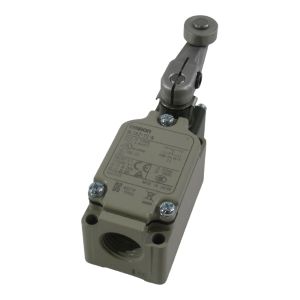
| Brand | Omron |
| Product | Limit Switch |
| Model Number | WLCA2-TS |
Omron WLCA2-TS Two-Circuit Limit Switch – Technical Overview
| Specification | Value |
|---|---|
| Actuator | Roller Lever |
| Contact Form | DPDT |
| Contact Configuration | Two-Circuit |
| Rated Switching Capacity | 10 A at 500 VAC |
| Current Rating | 100 mA |
| Voltage Rating | 125 VAC / 30 VDC |
| Degree of protection | IP67 |
The Omron WLCA2-TS is widely recognized as an Omron two-circuit limit switch designed for dependable position sensing in industrial automation systems. Its DPDT contact form allows simultaneous switching of multiple circuits, supporting accurate signal control in electromechanical applications.
In industrial applications, the Omron WLCA2-TS is commonly used in conveyor systems, machine tools, packaging machinery, and automated assembly equipment. The roller lever actuator provides consistent contact with moving parts, helping reduce mechanical wear while maintaining precise switching accuracy over repeated cycles.
Designed for long-term operational reliability, the WLCA2-TS offers stable electrical characteristics and high mechanical endurance. With an IP67-rated enclosure, wide operating temperature range, and robust internal construction, the switch supports continuous operation in demanding industrial environments where reliable limit detection is critical.