
Banner Q20NDXL Photoelectric Sensors
The Q20NDXL Banner Photoelectric Sensors is built for accurate object sensing with fast response speed, compact installation, and dependable optical detection performance. This Banner sensing device supports stable operation in automated production systems and material handling applications. The Photoelectric Sensors category is widely used for conveyor tracking, machine control, and industrial object detection processes.
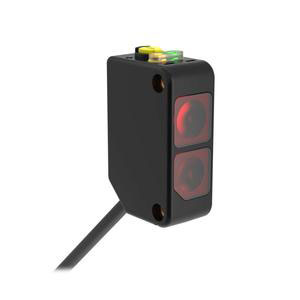
| Brand | Banner |
| Product | Photoelectric Sensors |
| Model Number | Q20NDXL |
Banner Q20NDXL Photoelectric Sensors - Technical Specifications
| Specification | Value |
|---|---|
| Housing Style | Rectangular |
| Sensing Mode (General) | Proximity |
| Sensing Mode (Detailed) | Diffuse |
| NEMA / UL Type Rating | NEMA 4X |
| Max Sensing Distance (mm) | 1500 |
| Outputs | NPN |
| Power Supply/Supply Voltage | 10-30 V dc |
| Connection | Cable |
| Output response time (ms) | 0.8 |
| IP Rating | IP67 |
| Sensing Beam | Infrared LED |
| Cable Length (m) | 2 |
| Primary Housing Material | Thermoplastic |
| Power | DC |
| Adjustments | Potentiometer |
| Indicator | LEDs |
| Lens Material | Acrylic |
The Banner Q20NDXL uses photoelectric sensing technology to detect the presence or movement of objects through emitted light signals. It helps automation systems monitor products, machine cycles, and positioning conditions with stable switching performance. The sensor supports reliable detection in applications where accurate object recognition is necessary for smooth equipment operation.
Q20NDXL is commonly applied in conveyor systems, packaging lines, automated assembly equipment, and material transfer stations. Industrial users use this sensor for carton sensing, component verification, counting applications, and product alignment tasks. Its compact design supports installation in machinery with limited mounting space and continuous production activity.
The Banner Q20NDXL is designed for long-term industrial operation in environments exposed to dust, vibration, and routine machine movement. Its durable housing helps maintain stable sensing performance during continuous automation processes. The sensor delivers dependable operation in manufacturing facilities where consistent detection accuracy and reduced maintenance interruptions are important.