
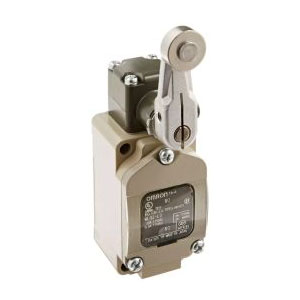
Omron WLG2-LD Roller Lever Limit Switch
Omron WLG2-LD is a Roller Lever Limit Switch designed for accurate mechanical position detection in industrial automation systems. As part of the Omron WL Series Switches, it features an R38 mm roller lever actuator for smooth engagement with moving machine components. A built-in DPDT contact mechanism supports reliable two-circuit switching for machine control applications. With IP67 protection, the WLG2-LD is suitable for demanding environments where dependable Omron Industrial Limit Switches are required. Related sensing, switching, and control products can be explored through Omron Automation in Chennai.
| Brand | Omron |
| Product | Limit Switch |
| Model Number | WLG2-LD |
Omron WLG2-LD Roller Lever Limit Switch – Technical Overview
| Specification | Value |
|---|---|
| Actuator | Roller Lever (R38 mm) |
| Contact Form | DPDT |
| Contact Configuration | Two-Circuit |
| Rated Switching Capacity | 10 A at 500 VAC |
| Current Rating | 100 mA |
| Voltage Rating | 125 VAC / 30 VDC |
| Terminals | Screw Terminals (G½ conduit) |
| Degree of protection | IP67 |
The Omron WLG2-LD is widely recognized as an Omron roller lever limit switch developed for consistent and repeatable position sensing in industrial automation environments. Its R38 mm roller lever enables stable contact with cams and sliding mechanisms, ensuring precise switching even under continuous mechanical stress.
In industrial applications, the Omron WLG2-LD is commonly used in conveyors, machine tools, packaging machinery, and automated assembly lines. The roller lever actuator reduces friction during operation, supporting smooth engagement and extending mechanical life in repetitive motion systems.
Designed for long-term reliability, the switch provides stable electrical performance and high mechanical endurance. With its rugged enclosure, dependable contact structure, and industrial protection characteristics, the Omron WLG2-LD delivers reliable limit detection in demanding automation conditions.